Researching sustainable textile systems through
colour, materials, and applied textile science

Sustainable Textiles and Apparel Research
Shaping the future of textiles through science, systems, and society
STAR is advancing the understanding of how textile and apparel materials, products, and systems perform in the real world. By combining expertise in textile science, colour, testing and performance, sustainability, and social science, we generate knowledge that supports more effective, responsible, and resilient textile futures.
Our research spans the full textile lifecycle, connecting fundamental science with practical application to create impact across industry, policy, and society.
Meet The Team
.jpg)
Dr Jane Wood

Research Group Director and Textile Technologist:
I am a textile technologist, researcher, and educator with over 18 years of international industry experience. My research focuses on textile materials and performance, exploring how the chemical and physical behaviour of textiles influences environmental, industrial, and societal outcomes.
As Director of the STAR Research Group, I lead interdisciplinary research spanning textile testing and performance, material innovation, colouration, fibre fragmentation, circular systems, and bio-based materials. Our work seeks to understand how textile materials function in practice and how they can be designed and applied to reduce environmental impact across their lifecycle.
My vision for STAR is to establish a globally recognised centre for textile materials and performance research that connects science, industry, and society to develop textile solutions with real-world impact.
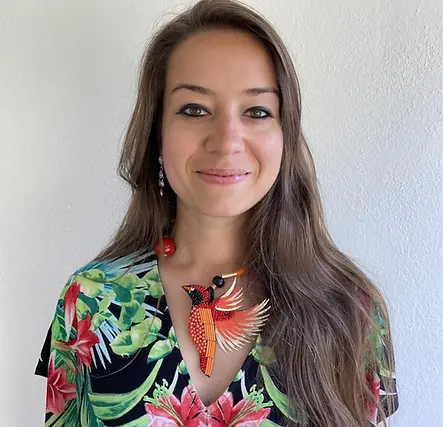
Dr Claudia Henninger
Research Group Director and Social Scientist:
I am a researcher and educator specialising in sustainable fashion, responsible consumption, and circular economy transitions. My work explores how consumers, organisations, and wider societal systems influence the adoption of more sustainable practices within the fashion and textile sector.
As Director of the STAR Research Group, I contribute expertise in consumer behaviour, stakeholder engagement, sustainability, and social science research methods. My research examines the social and behavioural factors that shape decision-making across fashion and textile value chains.
My vision for STAR is to advance interdisciplinary research that places people, practices, and systems at the centre of textile innovation, helping to develop solutions that are technically effective, socially relevant, and capable of supporting a more sustainable future.

Dr Lei Zeng
Research Group Scholarship Lead:
I am a Lecturer in Fashion Business and Technology at the University of Manchester, specialising in textile science and technology. My research focuses on sustainable materials, performance enhancement, textile recycling, and the integration of colour science within woven textile systems.
As Scholarship Lead for the STAR Research Group, I support the translation of research into teaching and curriculum development, helping to embed innovation within the student learning experience. I am passionate about supporting researchers in developing their academic teaching practice and fostering research-led education across textiles and fashion.
My work combines fundamental textile science with practical application, contributing to a more sustainable and competitive future for the global textile and fashion industries.

Dr Libby Allen
DKO Fellow:
I am a Dame Katherine Ollernshaw research fellow with a background in analysing microfibres that shed from textiles during wash and wearing. Over the next four years my research will develop new ways to detect and characterise micro and nanofibres using fluorescence imaging, I will also study the eco-toxicity of the chemicals on or within the fibres. This research will be used for sustainable textile design, smarter regulations, and new opportunities to develop cleaner, safer systems and reduce pollution reaching ourselves and the environment.

Charlotte Barras
KTP Associate:
My research focuses on the development of bio-based materials for the remediation of per- and polyfluoroalkyl substances (PFAS) and other emerging contaminants from water. Addressing the well-documented limitations of conventional remediation technologies, this aims to engineer scalable, sustainable filtration media with enhanced adsorption capacity, improved kinetics, extended operational lifetime, and defined regeneration and end-of-life strategies. This research is interdisciplinary, integrating textile technology, materials science, and process engineering.

Tanvir Mahady Dip
PhD researcher:
My research expertise centres on advanced biomedical textiles, with a particular focus on integrating nanotechnology with sustainable biomaterials to create next-generation healthcare solutions. A key aspect of my research work is to develop multi-functional wound care products that combine structural, therapeutic and performance benefits within a single platform. My broader research interest span over polymers for textiles, textile material circularity and electronics integration in textiles for healthcare applications. Overall, through an interdisciplinary approach I aim to advance sustainable, high-performing biomedical textile research that can contribute for the welfare of the humanity.

Priyadarshini Venkatraslam
PhD researcher:
I'm a PhD researcher with a background in Fashion and Textile Technology and experience across technical textiles, biomaterials, and advanced functional materials. My current research focuses on developing sustainable fibres from bacterial cellulose, bridging textile science, materials engineering, and biotechnology.
My aim is to translate emerging materials, from bio-derived fibres to advanced two-dimensional materials, into scalable solutions for future textile, filtration, biomedical, and sustainability-focused applications.

Tom Bird Jones
PhD researcher:
I am a ready to wear designer with eight years’ experience in womens occasion wear. My PhD explores the barriers to biomaterial adoption in fashion. With an MA in Fashion Design Technology, my work sits at the intersection of innovation and refinement, focusing on how biomaterials can be widely accepted and utilised in the fashion landscape.

Elena Probert
PhD researcher:
Elena's research is addressing the microfibres shed during textile production processes and the potential health impacts posed by these airborne particles.
There is evidence demonstrating that the inhalation of microfibres can cause significant health concerns, however, little has been investigated regarding those exposed to high concentrations daily. This research aims to quantify microfibres shed during different stages of textiles production within manufacturing facilities to identify hotspots for further research and the development of mitigation strategies.

Ellie Bibby
PhD researcher:
My research focuses on developing end‑of‑life strategies for industrial filtration textiles, aiming to close the loop on these highly specialised materials. I investigate how filtration textiles can be kept in circulation through improved design, reduced in‑service damage, and maximised value at end of life. This includes assessing recycling potential, recovering high‑value components, and minimising waste to landfill. I have a strong interest in science communication and the interface between technology and policy, and I am keen to collaborate with industry and academic partners to share knowledge and drive meaningful change.

Asyifa Jiniputri
PhD researcher:
I am a researcher interested in the relationship between textiles, culture, and sustainability. My work explores how traditional textile knowledge, indigenous practices, and community-led approaches can inform more sustainable futures for fashion and textiles.
As a member of the STAR Research Group, I contribute expertise in qualitative and interdisciplinary research, examining the social and cultural dimensions of textile production and consumption. My research seeks to understand how heritage practices and local knowledge can support sustainable innovation while preserving cultural identity.
Through my work, I aim to promote more inclusive and responsible approaches to fashion and textile development that recognise the value of diverse communities and knowledge systems.

Hannah Rampley
PhD researcher:
Hannah is a PhD researcher and educator in the field of textile recycling within the School of Materials at The University of Manchester. Hannah is currently on a teaching associate scholarship allowing for both teaching and research as part of her PhD study. Hannah comes from a creative background having worked as a textile designer and illustrator for 10 years after graduating from a programme in textile design at Leeds Arts University. In recent years, Hannah has worked as a visiting lecturer and a teaching technician in silk screen printing, fabric dyeing and colour physics with a strong focus on the science of colour. Hannah is in the first year of her PhD and her research interests span the circular economy, post-consumer waste, Indian textile recycling technologies, dye properties during recycling processes and Global North exports of discarded clothing.

Lena Bartoszewicz
PhD researcher:
My work focuses on textile donation partnerships between UK charity retailers and brands, exploring how these collaborations operate and how they can become fairer and more circular. I examine how responsibilities, costs, and value are distributed or negotiated across organisations, and how upcoming Extended Producer Responsibility (EPR) regulations could help strengthen cooperation, reduce textile waste, and support more sustainable and socially responsible textile reuse systems.

Dr Xiaoqing Zhang
Post doctoral researcher:
Xiaoqing Zhang joined the STAR research group in 2025. Her PhD focuses on modular fashion, in which clothing is designed as separate parts within a compatible system, and explores its sustainability potential as a new fashion design strategy and fashion practice.
Our Project Partners


The Dyers Company